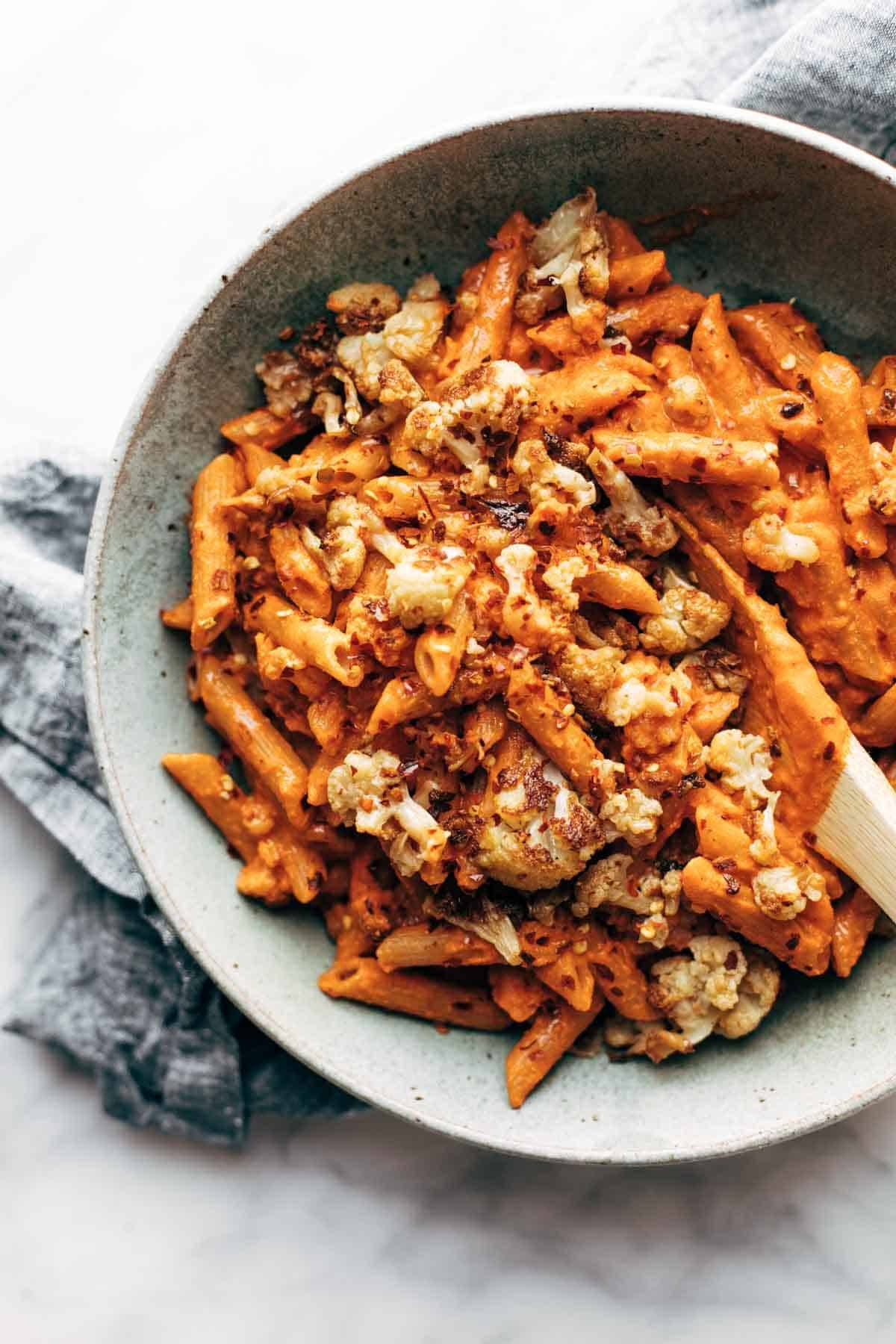
Transform your dinner routine with this luxurious Red Pepper Cashew Pasta with Roasted Cauliflower—a vibrant, plant-based dish that delivers the creamy richness of a traditional Alfredo without any dairy. This vegan pasta recipe features a silky-smooth sauce made from roasted red peppers and cashews, tossed with your favorite pasta and topped with golden, caramelized roasted cauliflower florets. The result is a stunning bowl of comfort food that’s both nutritious and indulgent, proving that plant-based eating can be every bit as satisfying as traditional Italian cuisine.
Perfect for weeknight dinners, meal prep, date nights at home, or entertaining vegetarian guests, this cashew cream pasta combines bold flavors, beautiful presentation, and wholesome ingredients into one unforgettable dish. The roasted red peppers provide sweetness and depth, cashews create impossible creaminess, and the roasted cauliflower adds textural contrast and nutty flavor that elevates this from simple pasta to restaurant-quality cuisine.
Why You’ll Love This Red Pepper Cashew Pasta
Dairy-Free Creaminess
The cashew cream sauce is so rich and velvety, you’ll never miss traditional cream or cheese—it’s indulgent comfort food that happens to be completely plant-based.
Nutritionally Balanced
This dish provides protein from cashews and pasta, complex carbohydrates, healthy fats, and vegetables, making it a complete vegan meal in one bowl.
Quick and Easy
Despite its gourmet appearance, this easy pasta recipe comes together in about 40 minutes with mostly hands-off time while vegetables roast.
Impressive Presentation
The vibrant coral-colored sauce and golden cauliflower create a visually stunning dish perfect for dinner party pasta that wows guests.
Budget-Friendly
Using affordable ingredients like pasta, cashews, and jarred roasted peppers, this economical vegan recipe feeds a family without breaking the bank.
Customizable
Easily adapt to different dietary needs, pasta shapes, vegetables, or protein additions, making this an adaptable weeknight dinner.
Makes Great Leftovers
This pasta reheats beautifully and actually tastes even better the next day as flavors meld, making it ideal for meal prep lunches.
Ingredients for Red Pepper Cashew Pasta with Roasted Cauliflower
For the Roasted Cauliflower
- 1 large head cauliflower, cut into bite-sized florets (about 6 cups)
- 3 tablespoons olive oil
- 1 teaspoon smoked paprika
- ½ teaspoon garlic powder
- ½ teaspoon sea salt
- ¼ teaspoon black pepper
- ¼ teaspoon red pepper flakes (optional)
- 2 tablespoons nutritional yeast (optional, for cheesy flavor)
For the Red Pepper Cashew Sauce
- 1 cup raw cashews, soaked in hot water for 30 minutes (or boiling water for 15 minutes)
- 1 jar (12 oz) roasted red peppers, drained (or 3-4 homemade roasted peppers)
- 3 cloves garlic, roasted or raw
- ¾ cup vegetable broth or pasta cooking water
- 2 tablespoons nutritional yeast
- 2 tablespoons fresh lemon juice
- 1 tablespoon olive oil
- 1 teaspoon dried basil
- ½ teaspoon dried oregano
- ½ teaspoon onion powder
- ½ teaspoon sea salt (adjust to taste)
- ¼ teaspoon black pepper
- ¼ teaspoon smoked paprika
- Pinch of red pepper flakes (optional, for heat)
For the Pasta
- 1 pound pasta (penne, rigatoni, fusilli, or your favorite shape)
- 1 tablespoon salt (for pasta water)
- Reserved pasta water (for adjusting sauce consistency)
For Serving and Garnish
- Fresh basil leaves, torn or chopped
- Fresh parsley, chopped
- Additional nutritional yeast
- Red pepper flakes
- Toasted pine nuts or cashew pieces
- Lemon zest
- Vegan parmesan (optional)
- Drizzle of high-quality olive oil
Optional Add-Ins
- 1 cup cherry tomatoes, halved
- 2 cups fresh spinach or kale
- ½ cup sun-dried tomatoes, chopped
- 1 cup white beans or chickpeas (for extra protein)
- ½ cup artichoke hearts, chopped
- Fresh arugula
- Capers for briny flavor
- Kalamata olives
Step-by-Step Instructions
Preparing the Roasted Cauliflower (30-35 minutes)
Step 1: Preheat the Oven
Preheat your oven to 425°F (220°C). Line a large baking sheet with parchment paper for easy cleanup and to prevent sticking. The high temperature is essential for achieving deeply caramelized, golden roasted cauliflower.
Step 2: Cut the Cauliflower
Remove outer leaves and cut the cauliflower into bite-sized florets, roughly 1 to 1½ inches in size. Try to keep pieces relatively uniform for even roasting. Don’t discard the tender inner stems—chop them into small pieces and roast alongside the florets.
Pro Tip: Cut some florets slightly smaller than others. The smaller pieces will get extra crispy and almost chip-like, adding wonderful textural variety to your crispy cauliflower topping.
Step 3: Season Generously
Place cauliflower florets in a large bowl. Drizzle with olive oil and add smoked paprika, garlic powder, salt, pepper, and red pepper flakes (if using). Toss thoroughly with your hands to ensure every piece is evenly coated with the seasoned oil.
Step 4: Arrange on Baking Sheet
Spread the seasoned cauliflower in a single layer on the prepared baking sheet. Don’t overcrowd—the florets should have space between them. Overcrowding creates steam instead of caramelization. Use two baking sheets if necessary for the best caramelized cauliflower results.
Step 5: Roast Until Golden
Roast for 25-30 minutes, tossing halfway through, until the cauliflower is deeply golden brown with crispy edges and tender interiors. The best pieces will have almost charred spots—that’s where the flavor is!
Step 6: Add Nutritional Yeast (Optional)
During the last 5 minutes of roasting, sprinkle nutritional yeast over the cauliflower if desired. It adds a cheesy, umami flavor and helps create an even crispier coating.
Step 7: Keep Warm
Remove from oven and set aside. The cauliflower can be roasted ahead of time and gently reheated before serving, or enjoyed at room temperature as a topping.
Making the Red Pepper Cashew Sauce (15 minutes)
Step 8: Soak the Cashews
Place raw cashews in a bowl and cover with hot water. Let soak for at least 30 minutes (or use boiling water for a 15-minute quick-soak). This softens them for blending into an impossibly smooth, creamy cashew sauce.
Why Soak? Soaking breaks down enzyme inhibitors and softens the cashews, allowing them to blend into a silky-smooth cream without any grittiness.
Step 9: Drain and Rinse
After soaking, drain the cashews thoroughly and rinse under cold water. This removes any residual enzyme inhibitors and ensures the cleanest flavor.
Step 10: Prepare the Peppers
Drain jarred roasted red peppers well, gently squeezing out excess liquid. Too much liquid will make your sauce thin and watery instead of rich and creamy.
Homemade Roasted Peppers: If roasting your own, char 3-4 red bell peppers under the broiler or over a gas flame until completely blackened. Place in a covered bowl for 10 minutes to steam, then peel off skins, remove seeds, and use.
Step 11: Blend Until Silky Smooth
In a high-speed blender, combine drained cashews, roasted red peppers, garlic, vegetable broth, nutritional yeast, lemon juice, olive oil, basil, oregano, onion powder, salt, pepper, smoked paprika, and red pepper flakes (if using).
Blend on high for 1-2 minutes, stopping to scrape down the sides as needed, until the sauce is completely smooth, creamy, and velvety with no grittiness. The sauce should be thick but pourable—similar to heavy cream.
Blender Tip: A high-speed blender (like Vitamix or Blendtec) creates the smoothest sauce. Regular blenders work but may require longer blending time and a bit more liquid for the best smooth vegan sauce.
Step 12: Taste and Adjust
Taste the sauce and adjust seasonings. Add more salt for depth, lemon juice for brightness, nutritional yeast for cheesiness, or garlic for punch. The sauce should be flavorful on its own since it will be coating bland pasta.
Step 13: Adjust Consistency
If the sauce is too thick, thin with vegetable broth, pasta water, or non-dairy milk until it reaches a pourable but still creamy consistency. If too thin, blend in a few more soaked cashews.
Make-Ahead Tip: This red pepper sauce can be made up to 5 days ahead and refrigerated in an airtight container. It will thicken when chilled; thin with warm pasta water when ready to use.
Cooking the Pasta (10-12 minutes)
Step 14: Boil Generously Salted Water
Bring a large pot of water to a rolling boil. Add about 1 tablespoon of salt—the water should taste like the sea. This is your only opportunity to season the pasta itself, which forms the base of this Italian-inspired vegan pasta.
Step 15: Cook Pasta Al Dente
Add pasta and cook according to package directions for al dente texture—usually 1-2 minutes less than the package suggests. Al dente pasta has a slight bite and holds sauce better than overcooked, mushy pasta.
Why Al Dente Matters: Pasta continues cooking slightly when tossed with hot sauce. Slightly underdone pasta will finish to perfect texture when combined with the sauce.
Step 16: Reserve Pasta Water
Before draining, reserve at least 1 cup of starchy pasta cooking water. This liquid gold helps thin the sauce and helps it cling to the pasta thanks to the starch content—essential for restaurant-quality pasta at home.
Step 17: Drain the Pasta
Drain pasta in a colander, but don’t rinse it. The residual starch on the pasta helps the sauce adhere. Shake the colander to remove excess water.
Combining and Finishing (5 minutes)
Step 18: Heat the Sauce
Pour the red pepper cashew sauce into a large skillet or the pasta pot over medium-low heat. Warm gently, stirring occasionally, until heated through. Don’t boil the sauce—gentle heating preserves the creamy texture.
Step 19: Combine Pasta and Sauce
Add the drained pasta to the warmed sauce. Using tongs or a pasta fork, toss gently but thoroughly to coat every piece of pasta with the creamy vegan Alfredo-style sauce.
Step 20: Adjust Consistency
Add reserved pasta water a few tablespoons at a time, tossing as you go, until the sauce reaches your desired consistency. It should coat the pasta beautifully without being too thick or too thin—silky and luxurious.
Step 21: Add Optional Extras
If using spinach, cherry tomatoes, sun-dried tomatoes, or other add-ins, fold them in now. Spinach will wilt from the residual heat, and tomatoes will warm through, adding color and nutrition to your vegetable pasta.
Step 22: Final Seasoning
Taste and adjust final seasonings. Add a squeeze of fresh lemon juice for brightness, a pinch of salt if needed, or a drizzle of olive oil for richness.
Plating and Presentation (5 minutes)
Step 23: Plate the Pasta
Divide the sauced pasta among serving bowls or plates. Use tongs to twirl pasta into neat nests if desired for elegant restaurant-style plating.
Step 24: Top with Roasted Cauliflower
Generously top each serving with the golden, crispy roasted cauliflower. The contrast between the creamy pasta and crunchy cauliflower is essential to this dish’s appeal.
Step 25: Garnish Beautifully
Sprinkle with fresh basil and parsley. Add a light dusting of nutritional yeast for a parmesan-like appearance. Scatter toasted pine nuts or cashew pieces for extra crunch. Add a pinch of red pepper flakes for visual pop and optional heat.
Step 26: Finishing Touches
Grate fresh lemon zest over the top for bright, aromatic finish. Drizzle with high-quality extra virgin olive oil for richness and shine.
Step 27: Serve Immediately
This creamy vegan pasta is best enjoyed fresh while the cauliflower is crispy and the pasta is hot. Serve with crusty bread for soaking up extra sauce and a simple green salad for a complete meal.
Expert Tips for Perfect Red Pepper Cashew Pasta
Use a High-Speed Blender
The difference between a high-speed blender and a regular blender is significant when making cashew cream sauces. High-speed blenders create impossibly smooth textures.
Don’t Skip Soaking Cashews
Properly soaked cashews blend into silky smoothness. Unsoaked cashews will create a grainy, gritty sauce no matter how long you blend.
Roast Cauliflower Hot and Spread Out
High heat (425°F) and plenty of space on the baking sheet are essential for caramelization. Low heat or overcrowding creates steamed, soggy cauliflower.
Reserve Extra Pasta Water
Always reserve more than you think you’ll need. Pasta water is invaluable for adjusting sauce consistency and helping sauce cling to pasta.
Season Generously
Cashews and pasta are bland on their own. Your sauce needs to be well-seasoned, and don’t forget to salt your pasta water generously.
Fresh Lemon Juice is Essential
Fresh lemon juice brightens the rich sauce and prevents it from tasting heavy. Bottled lemon juice doesn’t provide the same fresh, vibrant acidity.
Toast Your Nuts
If using pine nuts or cashews for garnish, toast them in a dry skillet for 3-5 minutes. The flavor difference is dramatic.
Don’t Overcook the Pasta**
Al dente pasta isn’t just texture preference—it’s functional. Slightly underdone pasta finishes perfectly when tossed with hot sauce.